
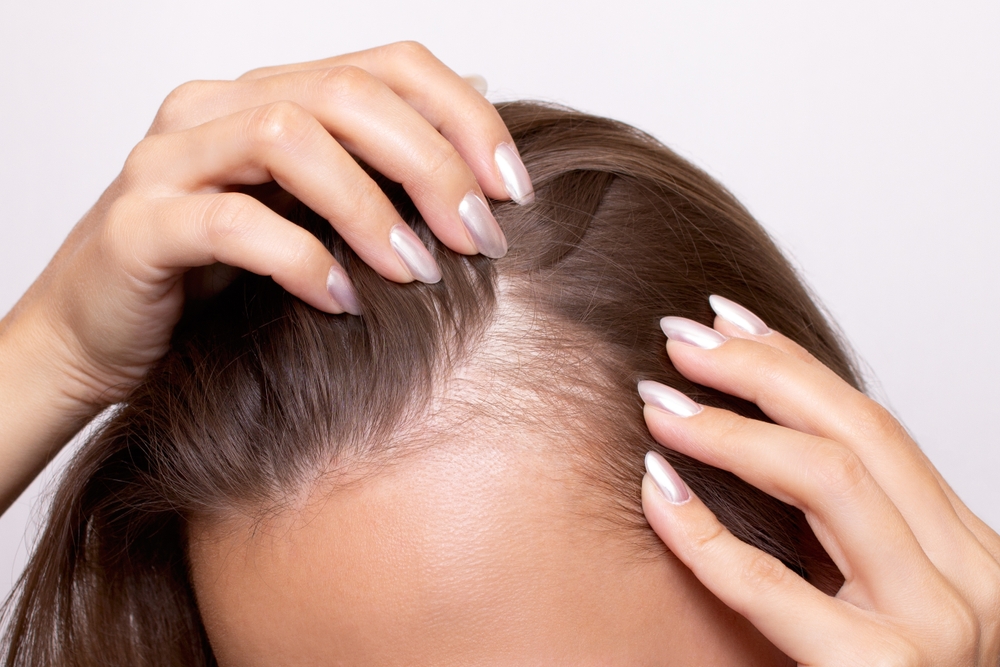
Hair thinning is incredibly common, especially in women. Hormonal changes, genetics, stress, illness, medications, nutritional deficiencies, and thyroid disorders can all play a role. But one contributor I think is frequently overlooked is iron deficiency.
When I evaluate someone for new or worsening hair loss, iron studies—including ferritin—are an important part of my initial workup.
One of the most important things to understand is that you do not have to be anemic to be iron deficient. In fact, anemia tends to occur relatively late in the progression of iron deficiency. Your hemoglobin can still be normal while your body’s iron stores are becoming depleted.
And hair follicles may notice the shortage long before your CBC does.
Why Does Iron Matter for Hair?
Hair follicles are among the most metabolically active structures in the body. During the anagen, or active growth phase, cells within the hair follicle are rapidly dividing to produce the hair shaft.
That process requires adequate nutrients, including iron.
Iron is essential for oxygen transport, cellular energy production, mitochondrial function, DNA synthesis, and the activity of enzymes involved in rapidly dividing cells. When iron stores become depleted, the body understandably prioritizes essential organs over something it does not consider necessary for survival—like growing hair.
As a result, inadequate iron availability may interfere with normal follicular activity and contribute to more hairs transitioning out of the growth phase and into the resting and shedding phases.
This can present as diffuse hair thinning or increased shedding, rather than obvious bald patches.
Ferritin Can Tell Us Something Hemoglobin Cannot
Ferritin is a protein that stores iron, and the serum ferritin level gives us an estimate of the body’s iron reserves.
This is why simply looking at whether someone is “anemic” can miss part of the picture.
Iron deficiency generally develops in stages. Iron stores decline first. As the deficiency progresses, iron availability to tissues becomes increasingly limited. Only later may hemoglobin production fall enough for the patient to meet laboratory criteria for iron-deficiency anemia.
Before anemia develops, some people may experience symptoms such as:
- Fatigue or decreased stamina
- Difficulty concentrating or “brain fog”
- Headaches
- Feeling cold
- Restless legs
- Reduced exercise tolerance
- Palpitations
- Brittle or easily breaking nails
- Hair shedding or thinning
- Pica, including craving or chewing ice
This is one reason I frequently check ferritin and iron studies, rather than relying solely on a CBC, when evaluating hair loss.
Ferritin does need to be interpreted in context. Because ferritin is also an acute-phase reactant, inflammation, infection, liver disease, and other conditions can sometimes make ferritin appear higher than the body’s usable iron stores would otherwise suggest. Depending on the situation, additional measurements such as serum iron, total iron-binding capacity and transferrin saturation can help complete the picture.
What Happens to Hair When Iron Deficiency Is Corrected?
I have seen firsthand how dramatically hair can begin to recover when an iron-deficient patient is appropriately treated.
The change is not immediate because hair grows according to its own biological cycle. Correcting the deficiency gives the follicle the resources it needs to resume normal function, but it may take months before that improvement becomes visible.
For patients who are iron deficient, oral iron is often the first step. Slow Fe is one oral iron preparation that is commonly used and is preferred by many hematologists because its slow-release formulation may be easier for some patients to tolerate.
Iron supplements should not simply be taken indefinitely without knowing whether iron deficiency is actually present. Excess iron is not beneficial and can be harmful, so testing and appropriate follow-up matter.
For patients who cannot tolerate oral iron, do not absorb it adequately, have ongoing significant iron losses, or whose iron stores fail to improve despite appropriate oral supplementation, intravenous (IV) iron may be another option.
Equally important is determining why the patient became iron deficient in the first place. Heavy menstrual bleeding is an extremely common cause in women, but gastrointestinal blood loss, pregnancy, frequent blood donation, restrictive diets, malabsorption and other medical conditions should also be considered.
Other Labs I Consider in the Initial Hair-Loss Workup
Iron is certainly not the only possible contributor to hair loss. Depending on the individual, an initial laboratory evaluation may also include:
Thyroid function: Both hypothyroidism and hyperthyroidism can affect the normal hair-growth cycle.
Vitamin D: Low vitamin D levels have been associated with several types of hair loss, although the relationship between vitamin D replacement and hair regrowth is not always straightforward.
Zinc: Zinc is involved in numerous cellular processes, and significant deficiency can contribute to hair loss.
Magnesium: Magnesium plays an important role in cellular metabolism and overall health. I may include it as part of a broader nutritional assessment, although the evidence linking isolated magnesium deficiency directly to common hair thinning is considerably less established than the evidence for iron deficiency.
This is not a comprehensive hair-loss evaluation, but it can provide a useful starting point.
What About Hormones?
Depending on a person’s age, symptoms and menstrual history, hormone evaluation may also be valuable.
Hair changes are particularly common during perimenopause and menopause. Declining estrogen and the changing balance between estrogen and androgens can influence the hair follicle and may contribute to changes in hair density, texture and growth.
But this is where hair loss becomes highly nuanced.
It is not necessarily as simple as finding a low estrogen level, prescribing estrogen and expecting the hair to return. Genetics, androgen sensitivity, thyroid function, nutritional status, iron stores, recent illness, weight loss, medications and the normal hair-growth cycle can all overlap.
In many women, there is more than one contributor.
Why I Don’t Immediately Reach for Hair Supplements
Patients frequently ask me about products such as Nutrafol.
I generally prefer to look for potentially correctable causes of hair loss before reaching for an expensive supplement.
Nutrafol has published clinical studies reporting improvements in hair-growth measurements, but the absolute improvements in objective hair counts have been relatively modest. It is also a multi-ingredient supplement, which makes it harder to determine which ingredients are actually providing benefit.
Multi-ingredient supplements can also have side effects and potential medication interactions. Rare cases of liver injury associated with some botanical dietary supplements have been reported, so I don’t assume that “natural” automatically means risk-free.
For me, the question is always whether the magnitude of the expected benefit justifies the cost, complexity and potential downside for that particular patient.
If someone’s ferritin is low, their thyroid is abnormal, they are vitamin deficient, or another underlying medical issue is driving the hair loss, I would much rather identify and address the underlying problem.
Start With the “Why”
Hair loss is a symptom, not a diagnosis.
Before spending hundreds of dollars on supplements, shampoos and serums, it is worth asking why the hair is thinning in the first place.
For many women, checking a CBC alone isn’t enough. Iron studies and ferritin deserve particular attention because iron stores can become depleted well before anemia appears.
And when true iron deficiency is identified and corrected, restoring adequate iron availability may allow follicles that have been struggling to return to a healthier growth cycle.
Hair takes time to respond. We are working with a biological cycle measured in months, not days or weeks. But finding and correcting an underlying deficiency can sometimes make a remarkable difference.
In my next post, I’ll discuss some of the treatments available for hair thinning and hair loss—including topical and prescription options—and how I decide which approaches make sense for different types of hair loss.
This information is intended for general education and is not a substitute for an individualized medical evaluation. Hair loss can have many causes, and iron supplementation should be based on appropriate clinical evaluation and laboratory testing.